

Driven by rapid innovation, significant investments, and an influx of funding, AI has taken center stage in today’s media landscape. A quick glance at YouTube reveals that many AI-related videos sport sensational titles—terms like “Insane,” “Amazing,” and “Unreal”—a trend that can sometimes feel overwhelming.
A few days ago, I decided to explore the hype surrounding AI-driven code editors. Many videos make it appear that you simply type your desired outcome, and the editor handles all the heavy lifting. The product I heard most frequently mentioned was Cursor AI—a fork of Microsoft’s VS Code that leverages advanced AI capabilities using the Claude 3.5 Sonnet LLM (large language model). I also experimented with another AI code editor called Trae, developed by ByteDance which also owns TikTok.
My goal was to create a mobile app to monitor my driving habits by tracking sudden acceleration, harsh braking, and sharp turns. I recall that when I learned to drive in Washington, Indiana, my instructor placed a glass of water on the dashboard, warning that any spillage would indicate poor driving technique. This lesson ingrained in me the importance of smooth acceleration, braking, and turning.
Before I could begin using Cursor, I had to launch Xcode—Apple’s integrated development environment—and create a basic project template. Once that was set up, I started using Cursor to specify the app’s functionality…
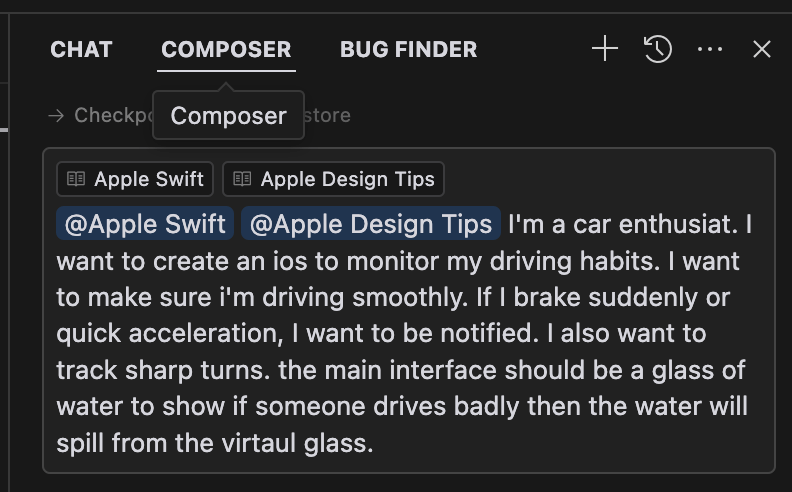
Cursor processed my input and instructed me to return to Xcode to run the program, only to encounter a significant error. Yep, these AI code editors were all part of the technology hype cycle…well that’s what I thought.
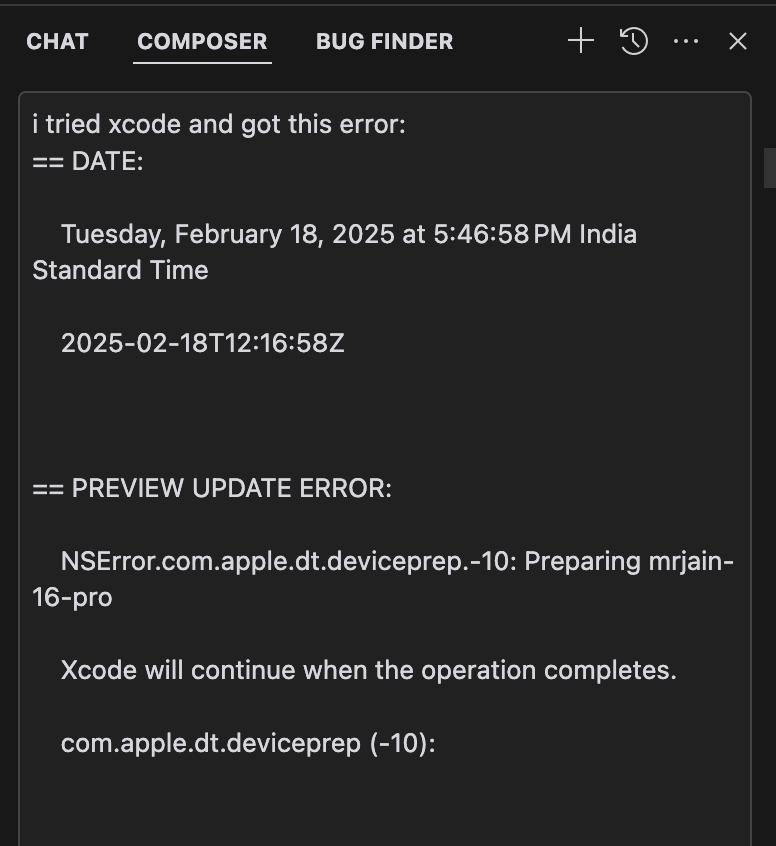
I then copied the error message back into Cursor, and after about ten minutes of back-and-forth troubleshooting, the app finally came together.

I should clarify a few points. Despite never having used Xcode or written a single line of mobile app code before, I am exceptionally skilled at copy-and-pasting. I have, however, served on the technical side of several startups as a CTO. Remarkably, I was able to create this app in just two hours—a process that, two years ago, might have taken several weeks or even a month.
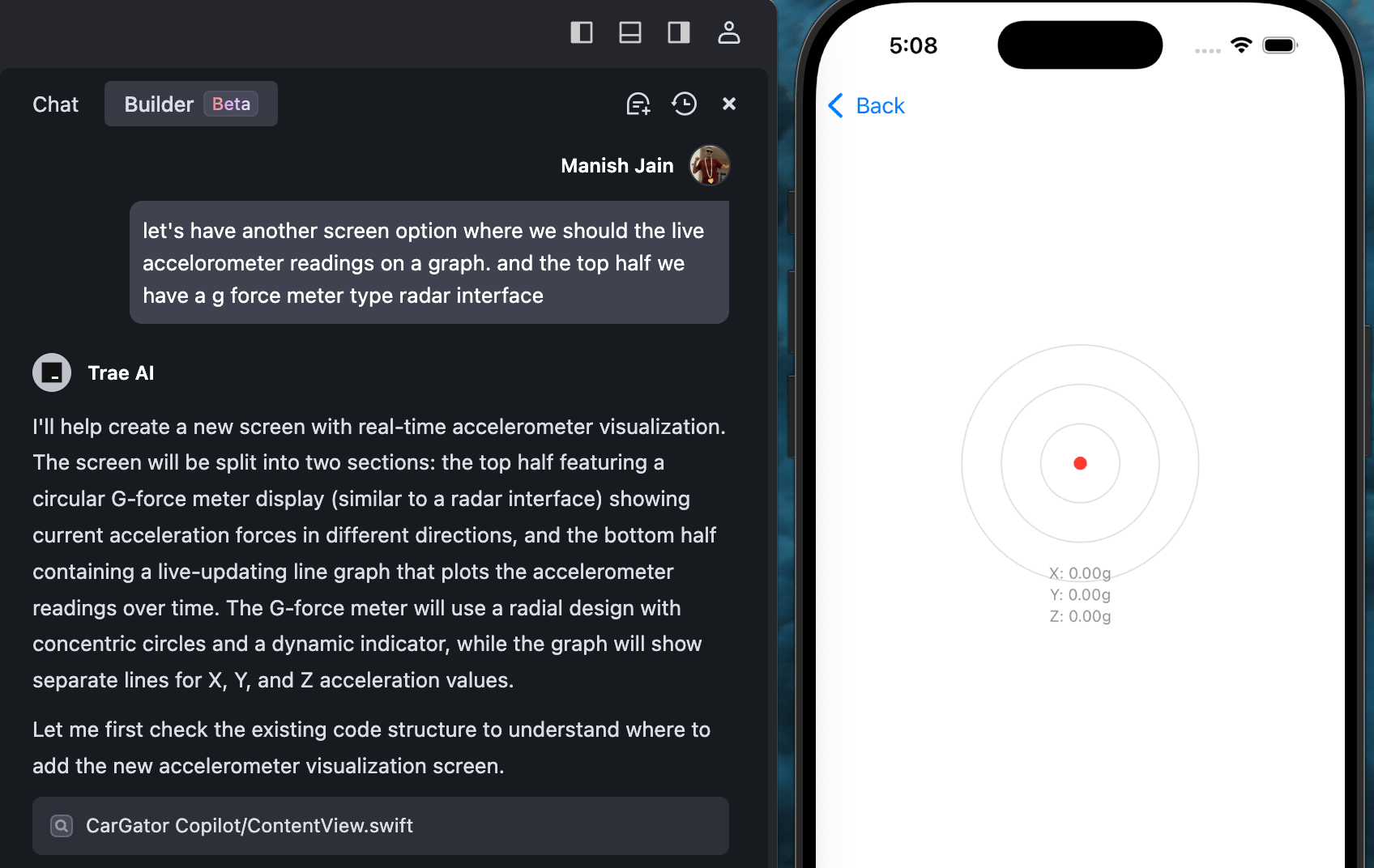
For example, I wanted to add a simple G-force radar interface to display real-time changes from the phone’s accelerometer. I merely typed that requirement into the chatbox, and within two minutes, the feature was operational.
One of my favorite books is The Innovator’s Dilemma by Clayton Christensen, which explores how successful companies can falter by focusing too heavily on current customer needs and established markets, thereby neglecting disruptive technologies. We are witnessing this in real time with companies like Google; I haven’t used Google Search in months, instead relying on tools like ChatGPT and Perplexity for my workflows.
While many express concerns about AI, I believe this technology will open up new opportunities and raise the bar for everyone. Just as the introduction of spreadsheets did not eliminate accounting jobs—instead enabling professionals to tackle more complex tasks—AI will allow us to concentrate on creative endeavors, strategic thinking, and uniquely human skills like empathy and critical judgment.
As we use AI in different areas, work will change, allowing us to automate repetitive tasks and focus on innovation. This change can create new jobs and industries, promoting teamwork between people and machines. Ultimately, adapting to this new situation can boost productivity and progress, leading to a better and more inclusive future.

 celestri - virtual home of manish jain