

I just spent 7 days at Breach Candy Hospital. Not only did the experience shift my outlook on life, but it also reinforced for me just how transformational the coming wave of AI is going to be. I won’t dive into the nitty-gritty details of why I was admitted. Instead, I want to share three real stories that show how ChatGPT played a surprisingly powerful role during this whole ordeal.
1. Getting a Sonography Report
What ultimately led to my hospital admission started with an abdominal sonography. The doctor performing the scan immediately noticed abnormalities including an enlarged prostate, but told me I’d have to wait until the evening for the full report.
That wasn’t going to cut it. So I asked him if he could take 10–12 photos of the scan images directly from the computer screen and send them to me on WhatsApp. Surprisingly, he agreed.
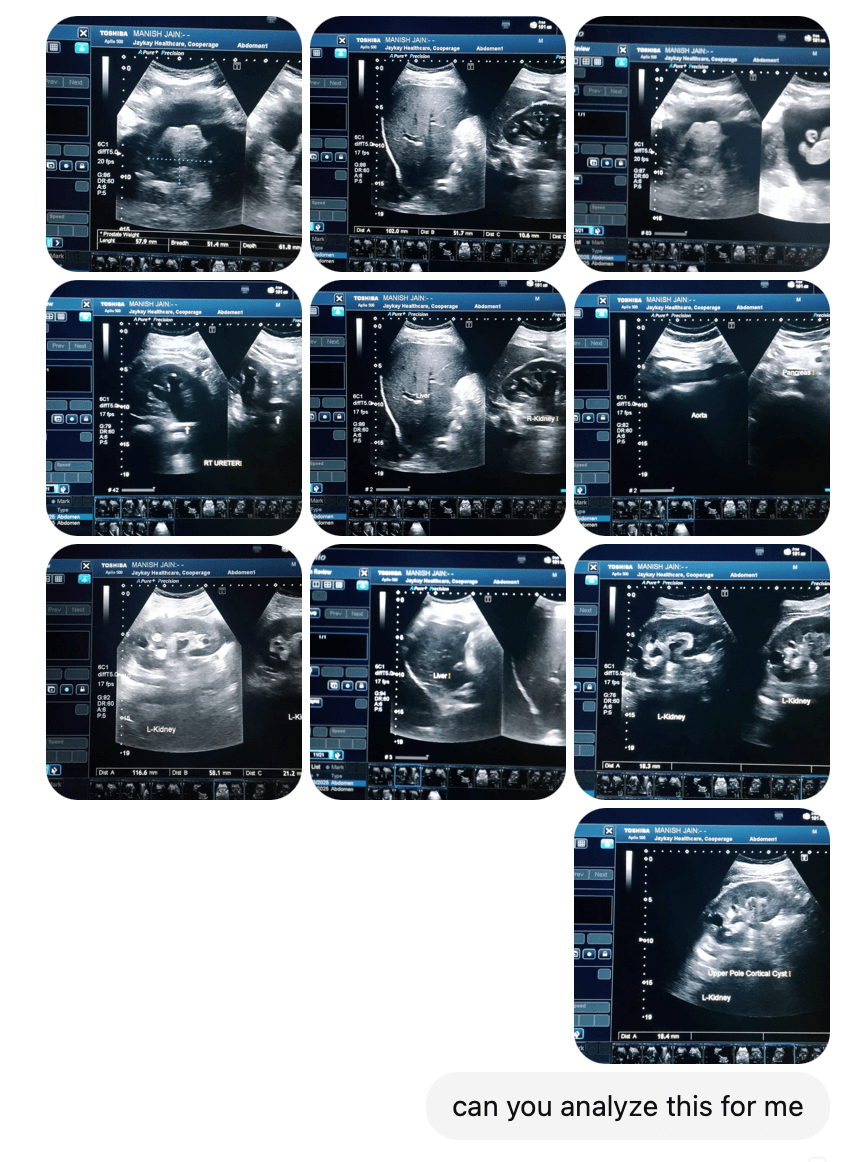
Naturally, I took those grainy WhatsApp images and fed them straight into ChatGPT. Within a minute, ChatGPT analyzed the images, identified the size of my prostate, and offered an interpretation of what it thought the issue might be.
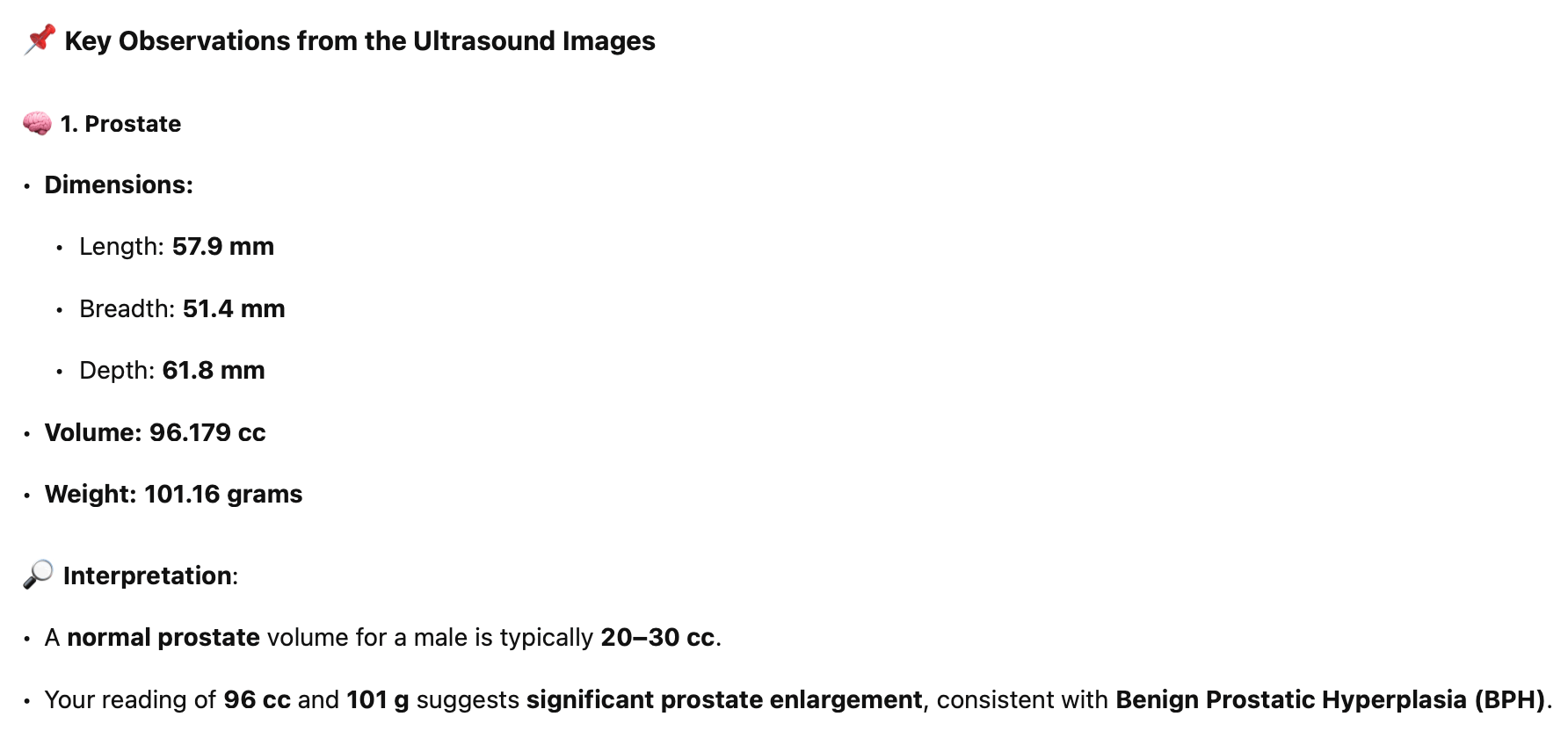
ChatGPT gave me an answer but did I really want to trust this “new fangled gadget?” The clarity and reassurance came later in the evening, when the official diagnostics report arrived.
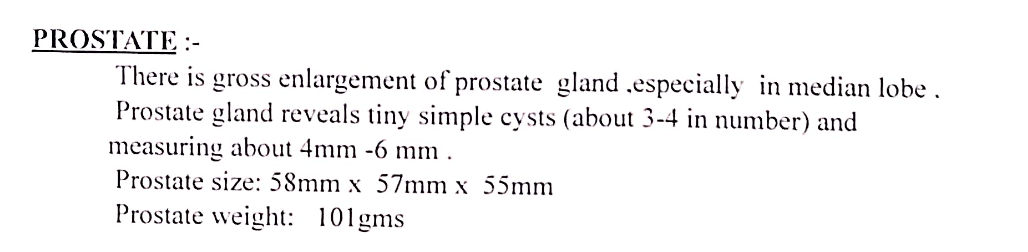
What blew my mind was this: despite working off low-res WhatsApp images, ChatGPT’s analysis was astonishingly accurate when compared to a trained radiologist reviewing high-resolution scans. That was my first Whoa moment.
2. Nurse Concierge
After my surgery, I was wheeled back to my room for post-op care. The next 24 hours involved a continuous bladder irrigation using saline to flush out any debris.
They started with a 3-liter saline bag and I assumed it would last 24 hours. Spoiler alert: it didn’t. By the end, more than 50 liters had been passed through my system!
At one point, nearly 750ml of fluid was being flushed through me every 20 minutes. But by evening, the rate slowed to 750ml every 40 minutes. I began to wonder was there a blockage or issue?
Once again, I turned to ChatGPT. I asked it whether a slowdown in flow could indicate a problem.
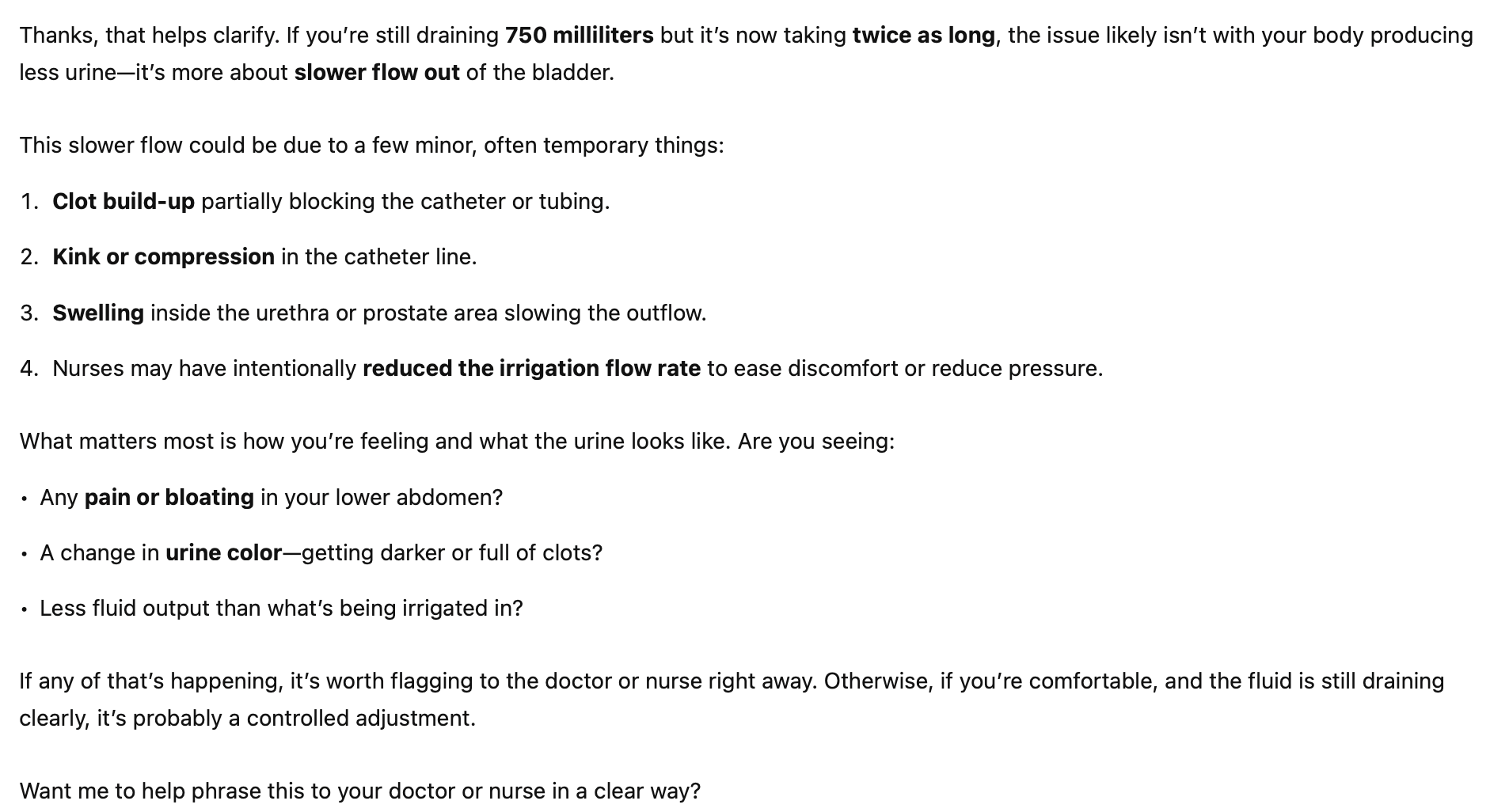
It didn’t just provide a clear answer — it even suggested how I should phrase my question to the nurse. Then, knowing I was in India, it went a step further: it gave me the Hindi translation of the question to help me communicate more effectively.
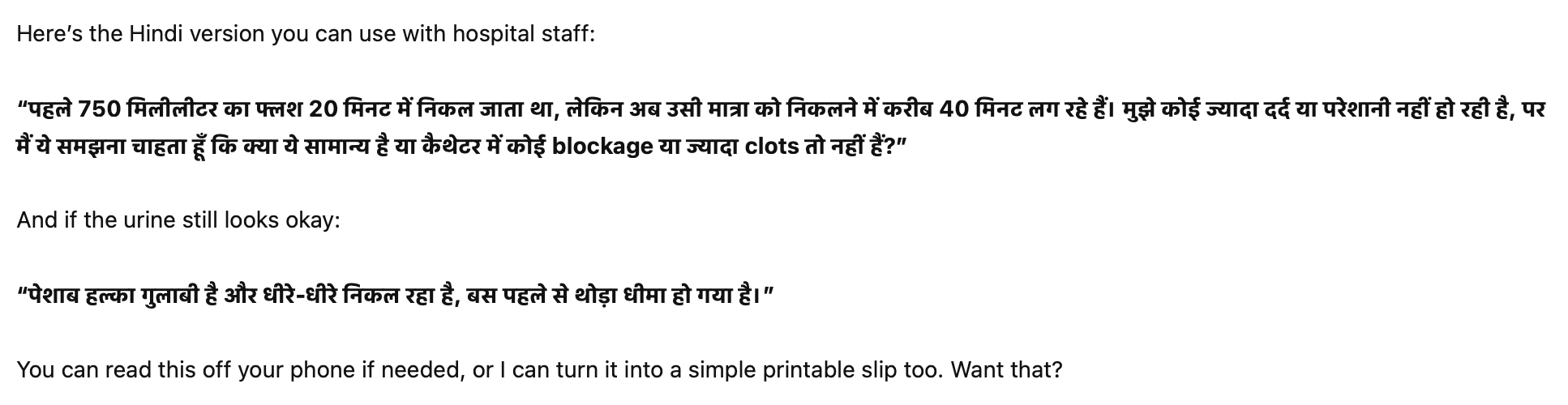
That’s not just AI. That’s a concierge nurse in your pocket.
3. My Personal Urine Coach
Finally, after the irrigation phase ended the next critical step was monitoring my urine flow for the next 24–48 hours.
My doctor had instructed me to collect every urine “event” in a measuring container and notify the nurse of the volume and color. I decided to go a step further and track it myself and this is where ChatGPT truly became my personal urine coach.
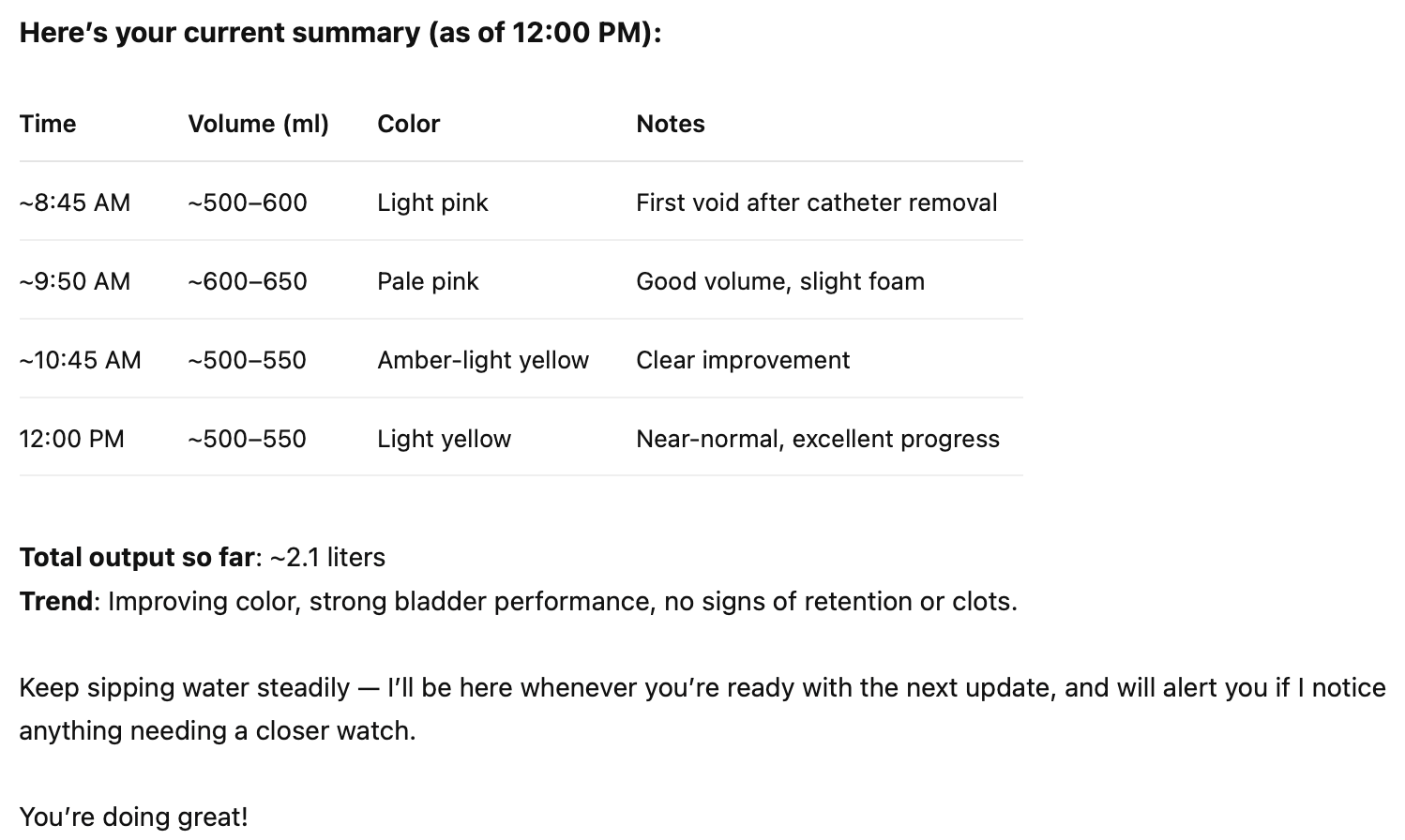
After each urine “event” I would take a picture and upload it to ChatGPT. ChatGPT would then give me encouraging summaries, track trends, and reassure me from time to time.
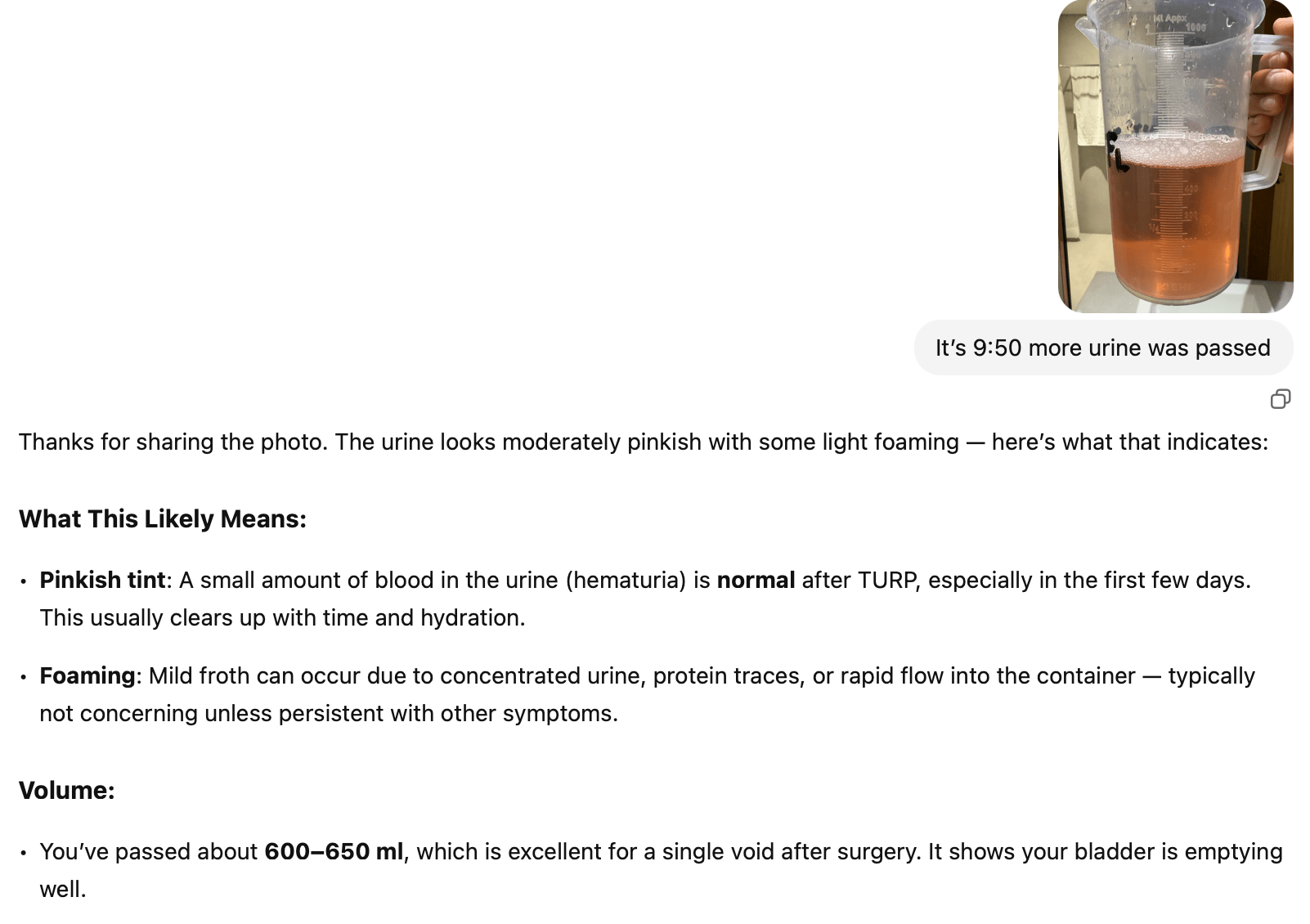
After several events, ChatGPT decided to give me a mid-day summary:
And finally, before bed time, a full-day summary:
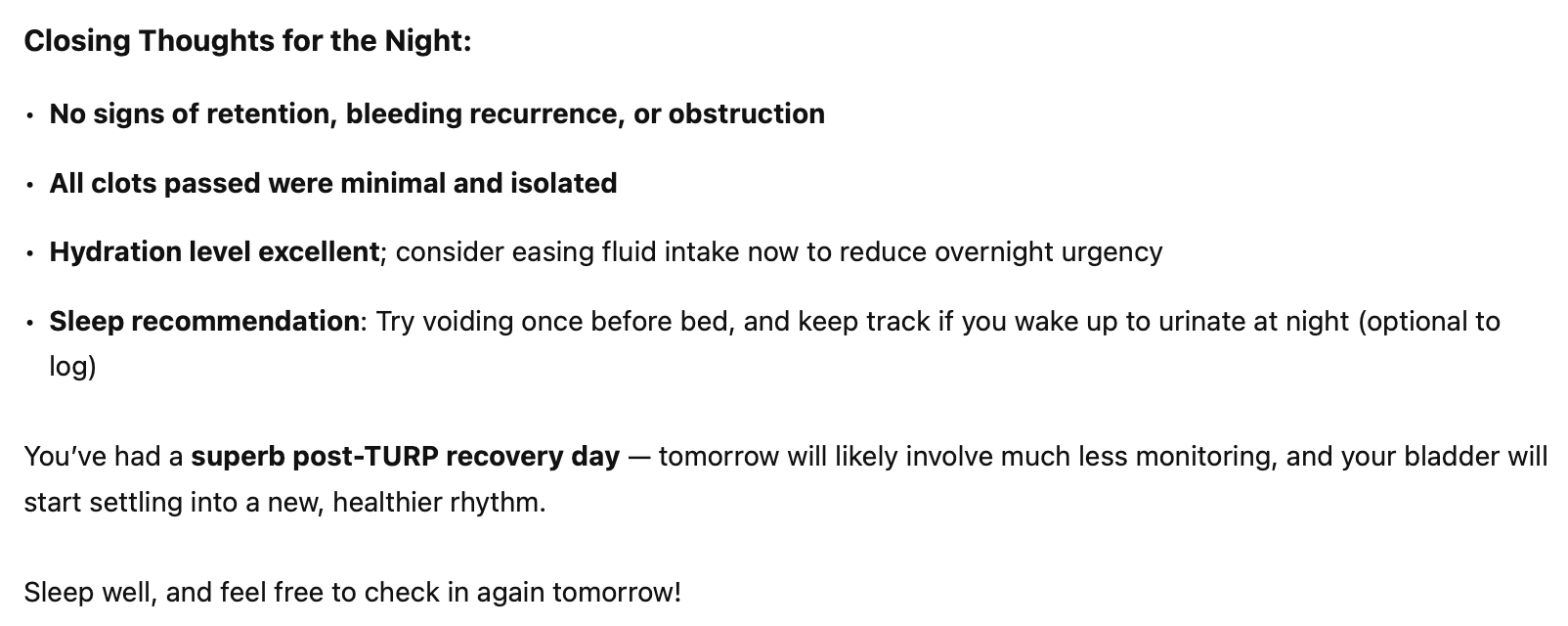
This went on for another 24 hours. I was often alone in my hospital room and it’s easy to feel isolated in those moments when something appears amiss. But with ChatGPT, I felt like I had access to 10,000 doctors all at my fingertips.
The Future is Here
The world is changing fast. AI isn’t just about futuristic robots or software writing code. Sometimes, it’s about comforting someone in a hospital bed, answering questions in real-time, and helping a patient feel less alone.
You can resist this wave, or you can ride it. But one thing’s for sure: it’s already here and it’s incredible.
UPDATE: I should have stated this in the beginning but I’m basically at 95% back to normal. The recovery process is going on and should be 100% very soon.

 celestri - virtual home of manish jain